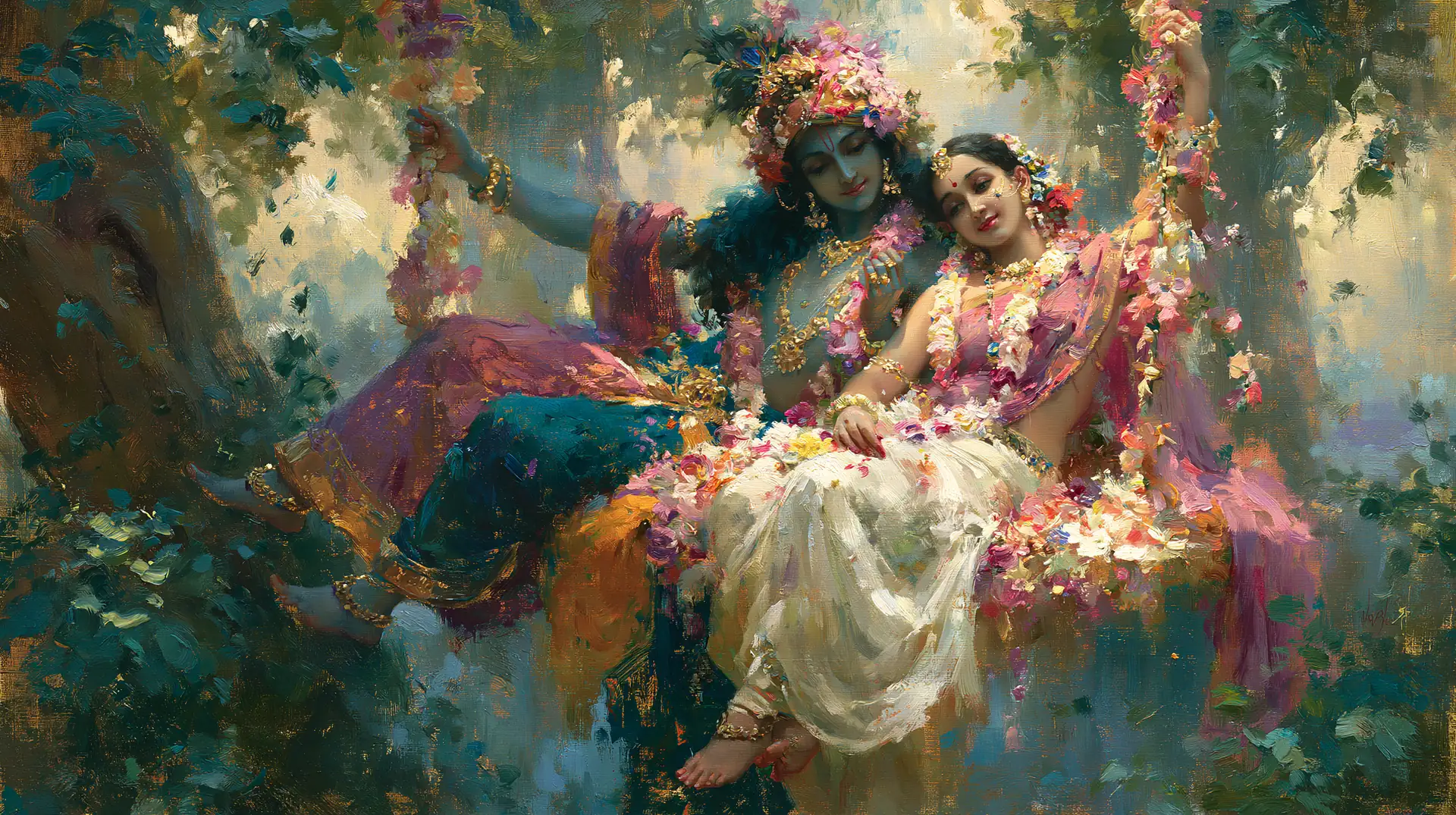
Wholeness taken from wholeness
Oṃ Pūrṇamadaḥ Pūrṇamidam
Shanti Path — Isha & Brihadaranyaka Upanishads
ॐ पूर्णमदः पूर्णमिदं पूर्णात्पूर्णमुदच्यते । पूर्णस्य पूर्णमादाय पूर्णमेवावशिष्यते ॥ ॐ शान्तिः शान्तिः शान्तिः ॥
oṃ pūrṇam adaḥ pūrṇam idaṃ pūrṇāt pūrṇam udacyate pūrṇasya pūrṇam ādāya pūrṇam evāvaśiṣyate oṃ śāntiḥ śāntiḥ śāntiḥ
Word by word
- pūrṇam adaḥ
- that (the unseen) is whole
- pūrṇam idam
- this (the seen world) is whole
- pūrṇāt pūrṇam udacyate
- from the whole, the whole arises
- pūrṇasya pūrṇam ādāya
- taking the whole from the whole
- pūrṇam eva avaśiṣyate
- the whole alone remains
Where it comes from
This is the shanti path — the peace invocation — that opens the Isha Upanishad and closes teachings in the Brihadaranyaka. It is chanted before study begins, which is a clue to its purpose: it sets the largest possible frame around whatever is about to be learned. The three shantis at the end quiet the three directions trouble comes from — from the heavens, from the world around, and from within oneself.
What it means
The verse says something ordinary arithmetic cannot. Adah, 'that,' is the unseen fullness from which everything comes; idam, 'this,' is the world in front of you. The world's arising did not subtract anything from its source. Take infinity from infinity and infinity remains. Creation, the verse insists, is not a leak or a loss. The ocean is not less because a wave has risen from it — and the wave is not other than ocean.
Reflections
Most of our thinking is scarcity arithmetic: whatever is given must be given up, whatever exists here must be missing there. The verse breaks that habit at the deepest level. The Divine did not shrink to make the world. Fullness is the kind of thing that can be endlessly given away whole.
It rewards a slow read. Four statements, each using purnam, each placing the word differently, like a jeweller turning one stone in the light. Chanted before study, it tells the student: what you are about to learn is a wave of something already complete, and so are you.
And then peace, three times. Not one blanket blessing but three settlements, one for each direction disturbance arrives from. The Upanishads are precise even when they are being vast.