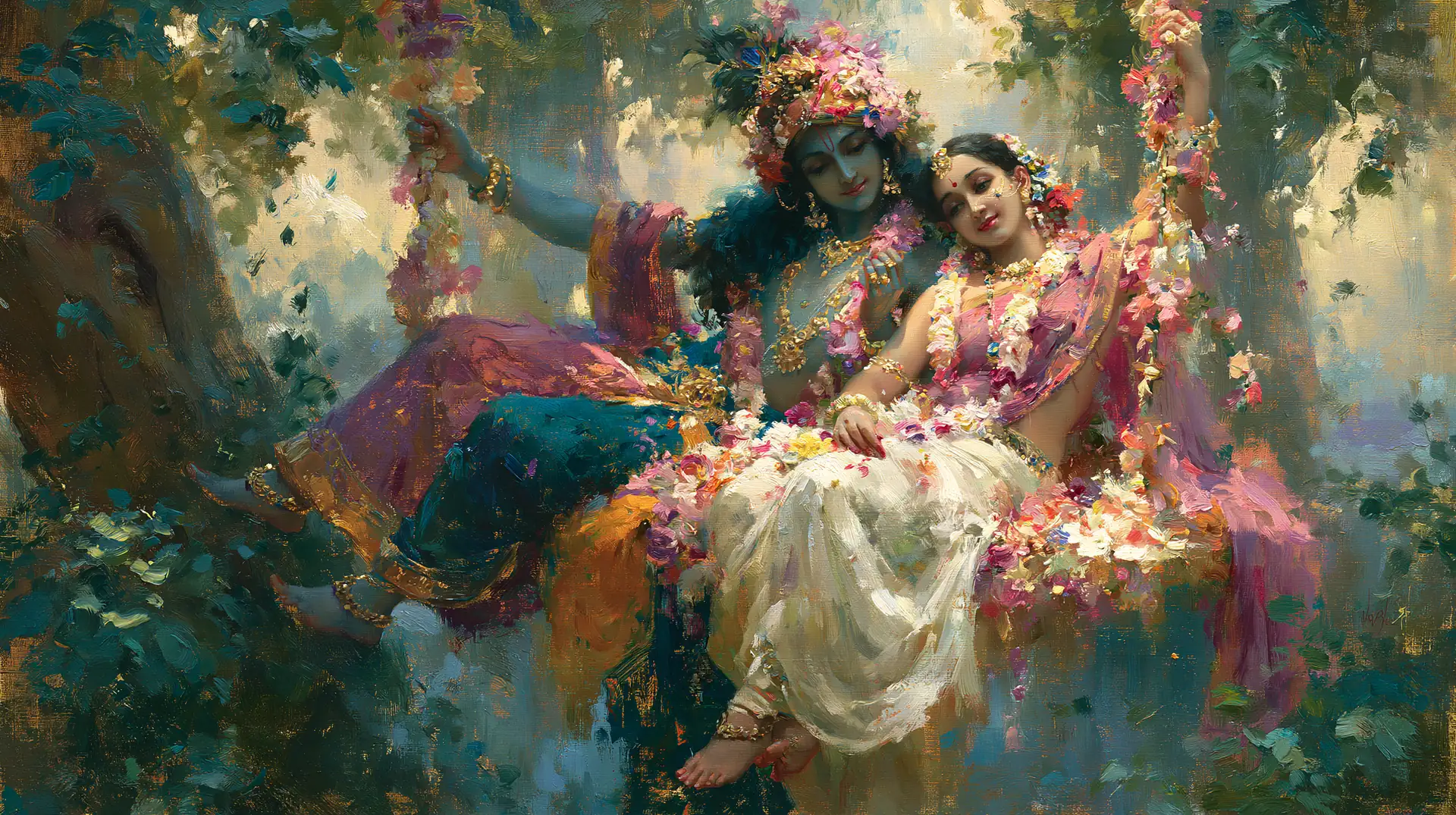
Refuge in the Lord of Ayodhya
Jay Rām Ramā Ramanaṃ
Ram stuti, Tulsidas tradition
जय राम रमा रमनं समनं । भव ताप भयाकुल पाहि जनम् ॥ अवधेस सुरेस रमेस बिभो । सरनागत मागत पाहि प्रभो ॥ गुन सील कृपा परमायतनं । प्रनमामि निरंतर श्रीरमनं ॥
jaya rāma ramā ramanaṃ samanaṃ bhava tāpa bhayākula pāhi janam avadhesa suresa ramesa vibho saranāgata māgata pāhi prabho guna sīla kṛpā paramāyatanaṃ pranamāmi nirantara śrī-ramanaṃ
Victory to Lord Ram, beloved of Lakshmi, who stills all affliction — protect your people, tormented by the fears and fevers of this world. O Lord of Ayodhya, Lord of the gods, Lord of Lakshmi, all-pervading one — those who come seeking and surrendering, protect them, O Lord. Supreme abode of virtue, nobility, and grace — I bow to the beloved of Shri, without ceasing.
Where it comes from
This stuti in praise of Lord Ram comes from the devotional world of Tulsidas, the tradition that gave us the Ramcharitmanas and Hanuman Chalisa. Like most stutis it piles name upon name — Avadhesa, Suresa, Ramesa, Vibho — because each title opens a different window on the same Lord. It is sung at Ram Navami, at kathas, and wherever the Manas tradition gathers.
What it means
The emotional spine of the hymn is sharanagati, taking refuge. Twice it cries pahi — protect — and the ones to be protected are described exactly: people rattled and worn by bhava-tapa, the low fever of worldly life that everyone recognizes and nobody can quite cure alone. The hymn's answer is not a technique. It is an address: turn toward the one who is the paramayatana, the supreme shelter, and keep bowing until the fear quiets.
Reflections
Notice how the titles work. Lord of Ayodhya is close and historical; Lord of the gods is cosmic; beloved of Lakshmi is intimate. Saying them in one breath stitches those scales together, so the God you ask for help is at once the king in a story, the power over all powers, and someone's beloved.
The word nirantara — without interruption — sets the standard for the bowing. Not a bow when trouble comes and silence after. The stuti imagines devotion as a continuous lean, the way a plant leans at the sun all day, not only at dawn.
Sing it when the news is bad and the mind is loud. Its short syllables were built for troubled breathing, and by the third line the hymn is doing the breathing for you. That is what stutis are for.