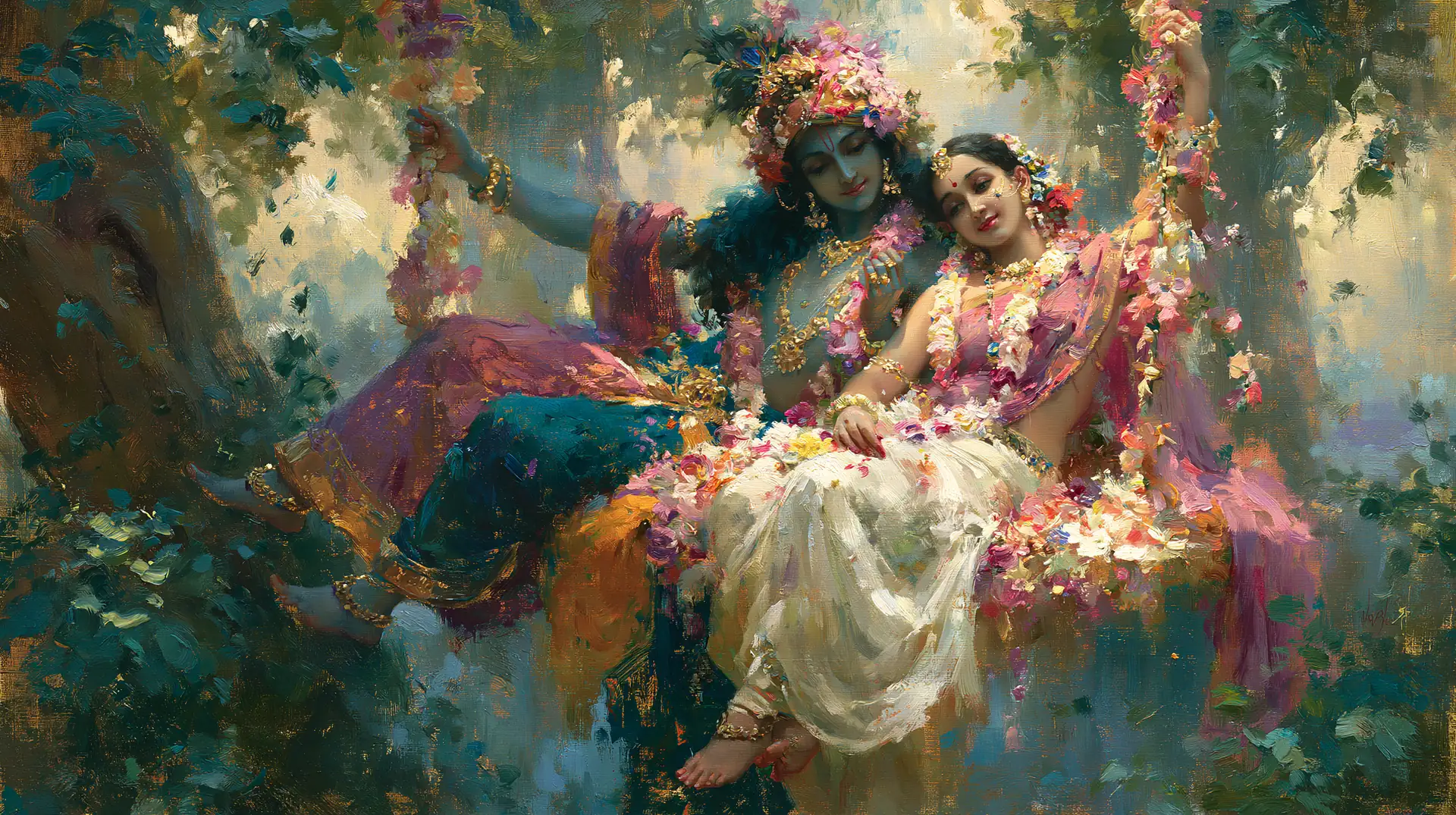
A prayer for the welfare of all
Sarve Bhavantu Sukhinaḥ
Traditional Shanti Mantra
सर्वे भवन्तु सुखिनः सर्वे सन्तु निरामयाः । सर्वे भद्राणि पश्यन्तु मा कश्चिद्दुःखभाग्भवेत् ॥
sarve bhavantu sukhinaḥ sarve santu nirāmayāḥ sarve bhadrāṇi paśyantu mā kaścid duḥkha-bhāg bhavet
May all be happy. May all be free from illness. May all see what is good. May no one come to suffering.
Where it comes from
This is one of the most widely recited shanti mantras in the Hindu world. It is heard at the close of pujas, at the end of a yoga class, and after public ceremonies. It does not belong to a single hymn. It sits in the broad family of Vedic peace invocations and has been passed along by recitation more than by any one book.
What it means
Read the four lines back to back and you notice what is missing: the word “I.” Every wish is for sarve, for all. The person reciting it asks for nothing for themselves. Happiness, health, good fortune, and freedom from grief are requested on behalf of everyone, with no exception left out at the end.
Reflections
The four wishes climb in a deliberate order. First sukha, plain happiness. Then arogya, health, because happiness is hard to hold without it. Then the wish to “see good things,” to live among auspiciousness. And last, the floor beneath all of it: mā kaścit duḥkha-bhāg bhavet, may no one be left carrying sorrow.
That final line is the one people remember. It does not ask for everyone to be lifted to the same height. It asks that no one be left below a certain line. It is a prayer with its eyes on the person at the back.
Said slowly before a meal or at the end of an aarti, it resets where the attention sits. For a few seconds the wish is not for your own house but for every house, which is a small and useful correction to make each day.