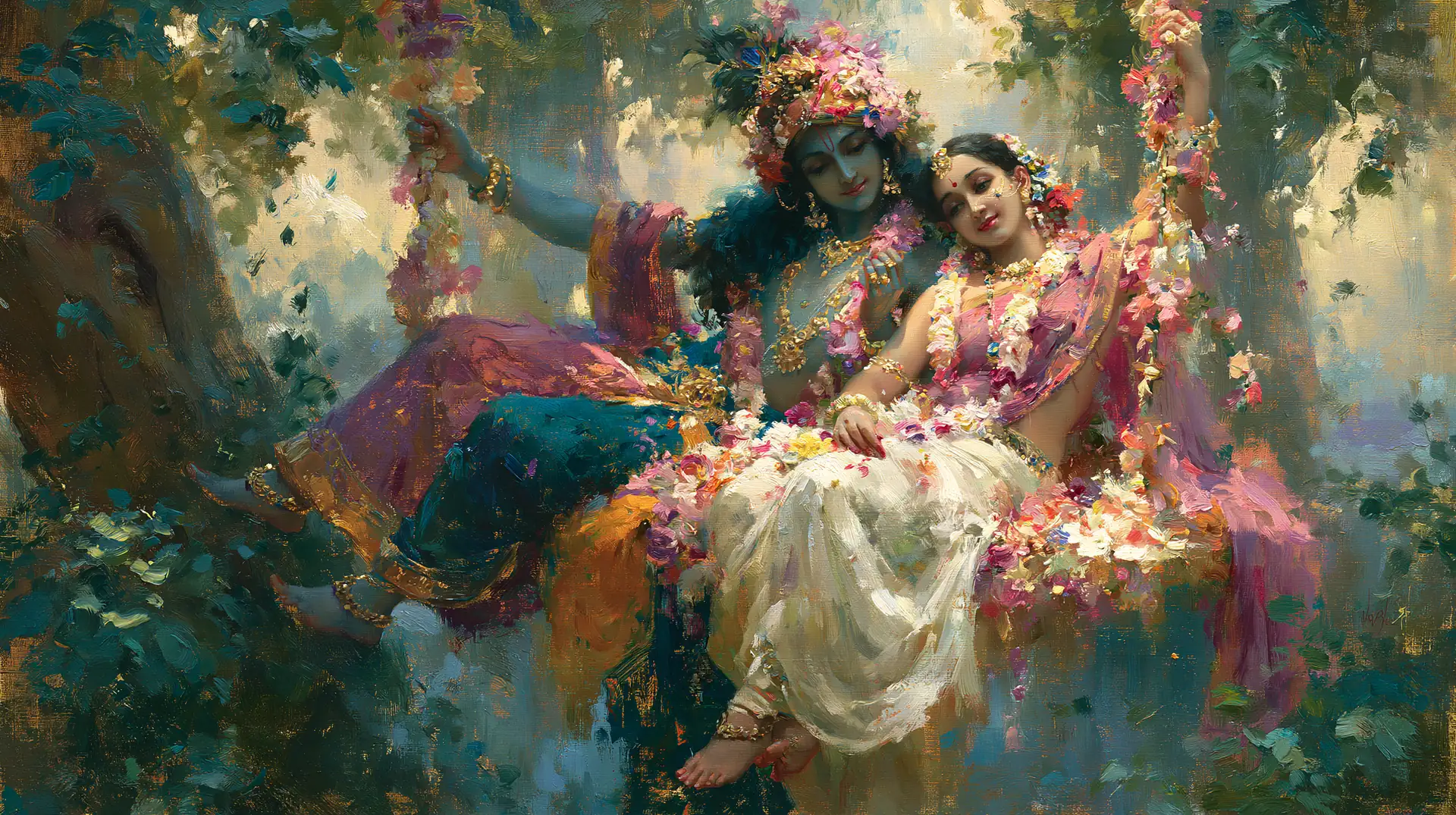
What Is Shrimad Bhagwat Katha? A Seven-Day Journey with Krishna
More than a recitation, Bhagwat Katha is seven days of sacred story, music, reflection, and community centred on the life and teachings of Lord Krishna.
There is a particular stillness just before a Katha begins. Families settle onto the floor, children find a place beside their grandparents, the harmonium sounds its first note, and the Bhagwat Ji is opened with reverence. For the next few hours, an ancient sacred text becomes a living conversation.
That is Shrimad Bhagwat Katha: the teachings and stories of the Shrimad Bhagavatam shared aloud by a Katha Vyas through narration, explanation, bhajan, and prayer. Traditionally held over seven days, it brings a community together around one of Hindu dharma’s most beloved questions: how do we remember Bhagwan while living an ordinary human life?
A small but useful distinction: the Bhagavad Gita is Shri Krishna’s dialogue with Arjuna on the battlefield of Kurukshetra. The Shrimad Bhagavatam is a larger Purana filled with accounts of Bhagwan’s avatars and devotees, with the life and leelas of Shri Krishna at its heart. Bhagwat Katha is drawn from the latter.
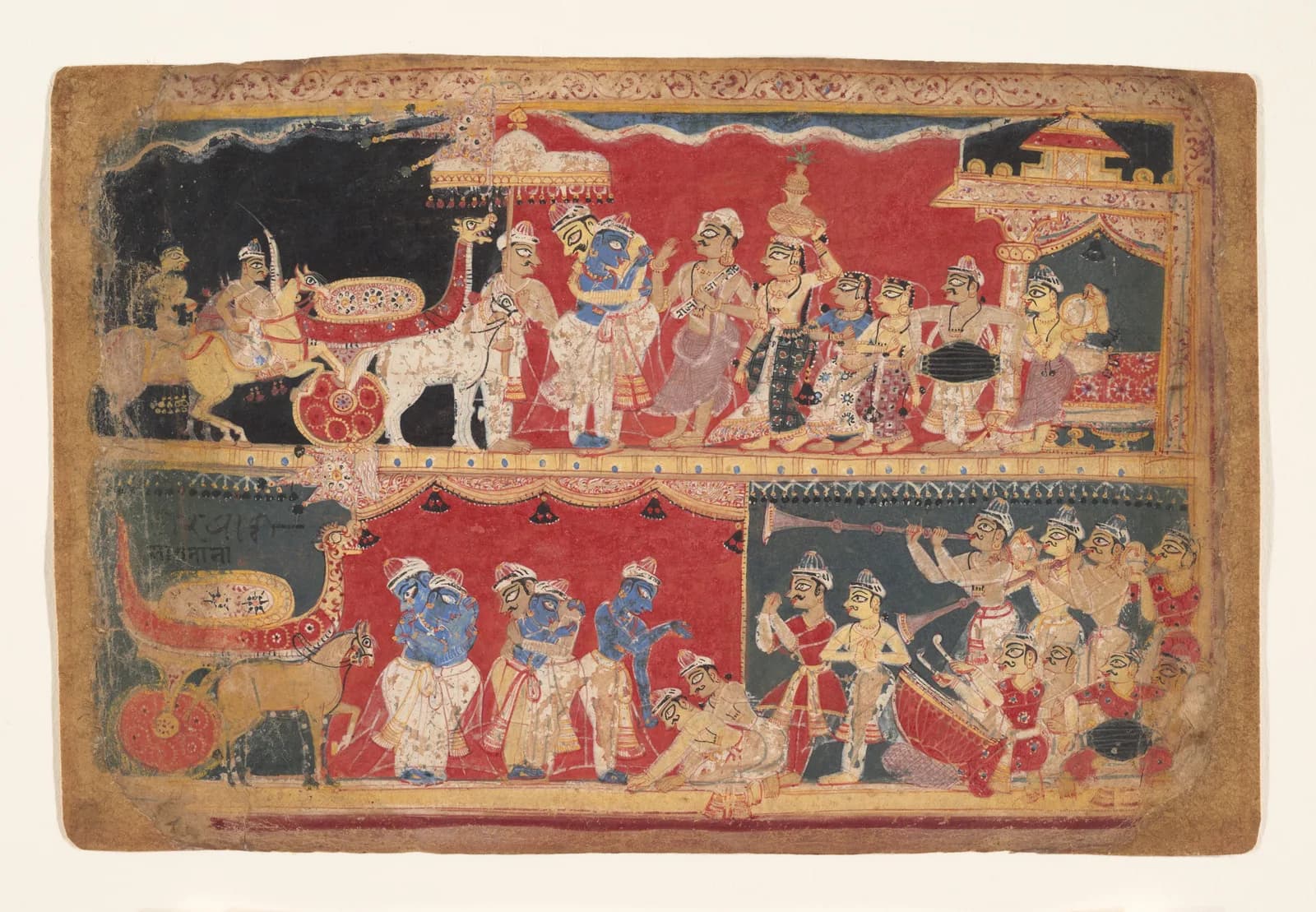
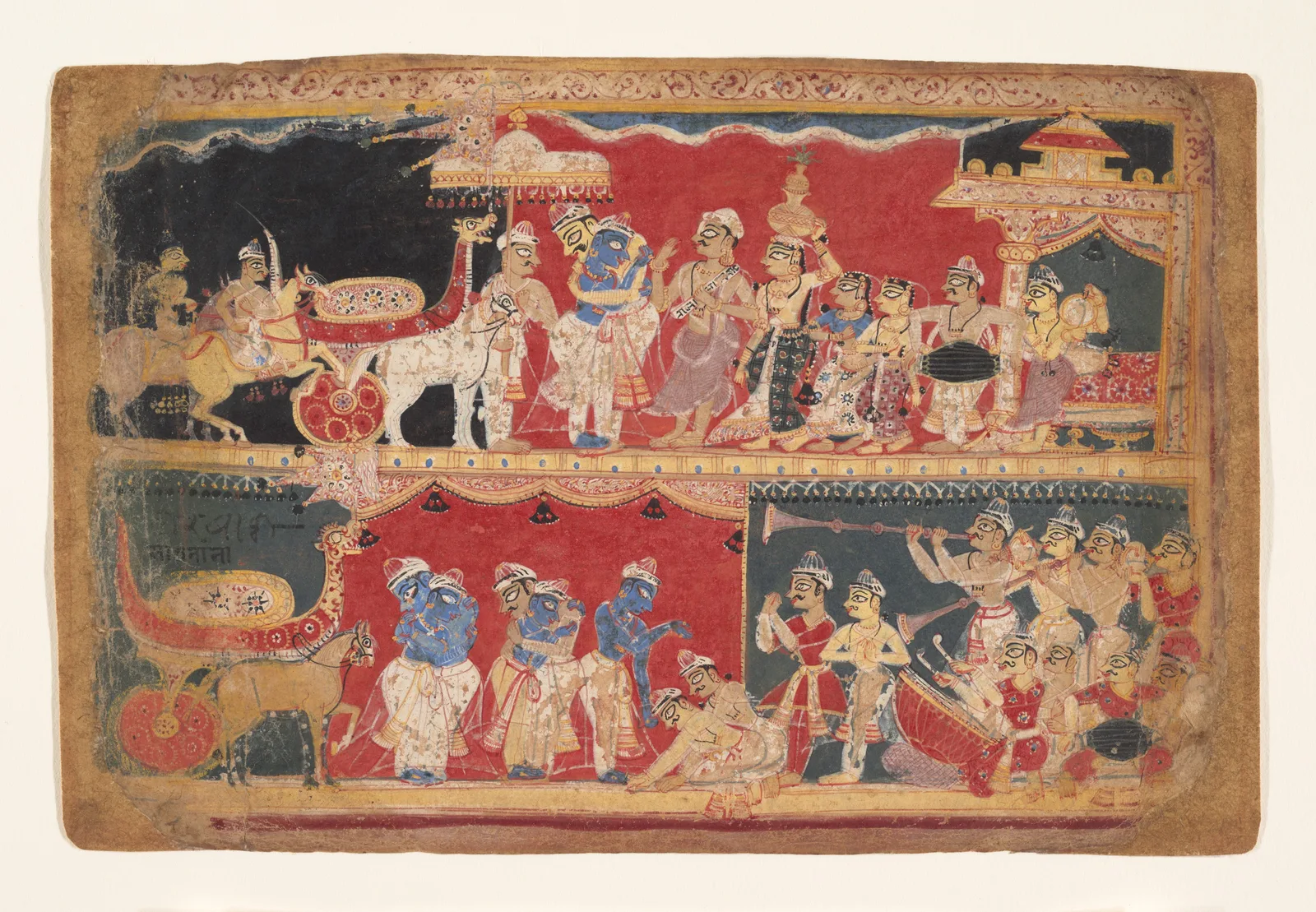 Krishna welcomed into Mathura, from a Bhagavata Purana manuscript made in the Delhi–Agra region, about 1520–40. The Metropolitan Museum of Art, public domain.
How old is the Bhagwat Katha tradition?
There are really three histories here: the sacred narrative, the written text, and the seven-day public performance.
Within the tradition, the Bhagavatam is attributed to Veda Vyasa. Its own frame story tells how Shukadeva, Vyasa’s son, narrated it to King Parikshit as the king approached the end of his life. Devotees therefore understand Katha as the continuation of that first act of sacred listening: one speaker, an attentive assembly, and Bhagwan remembered through story.
Historians date the Sanskrit text differently. Because sacred texts grow through oral transmission before and alongside manuscripts, no single “first copy” survives. Modern scholars generally place the Bhagavata Purana’s composition or final form between the eighth and tenth centuries CE. The Persian scholar al-Biruni knew the text by the early eleventh century, which gives us a firm historical marker. By then, its theology and Krishna narratives were already established enough to travel widely.
The formal seven-day performance came later. Storytelling, Purana recitation, temple discourse, and public hearing are much older practices, but the highly organized Bhagavata-saptaha familiar today developed over time. Instructions for a week-long recitation appear in the Bhagavata Mahatmya attached to the Padma Purana. Scholarship on Katha performance traces the recognizable idealized saptaha format to around the early eighteenth century. It grew from household and temple observance into the large public Kathas now heard across India and the diaspora.
This does not mean the Katha was suddenly “invented” on one date. It means an ancient culture of oral sacred storytelling gradually took the seven-day ritual form we recognize today.
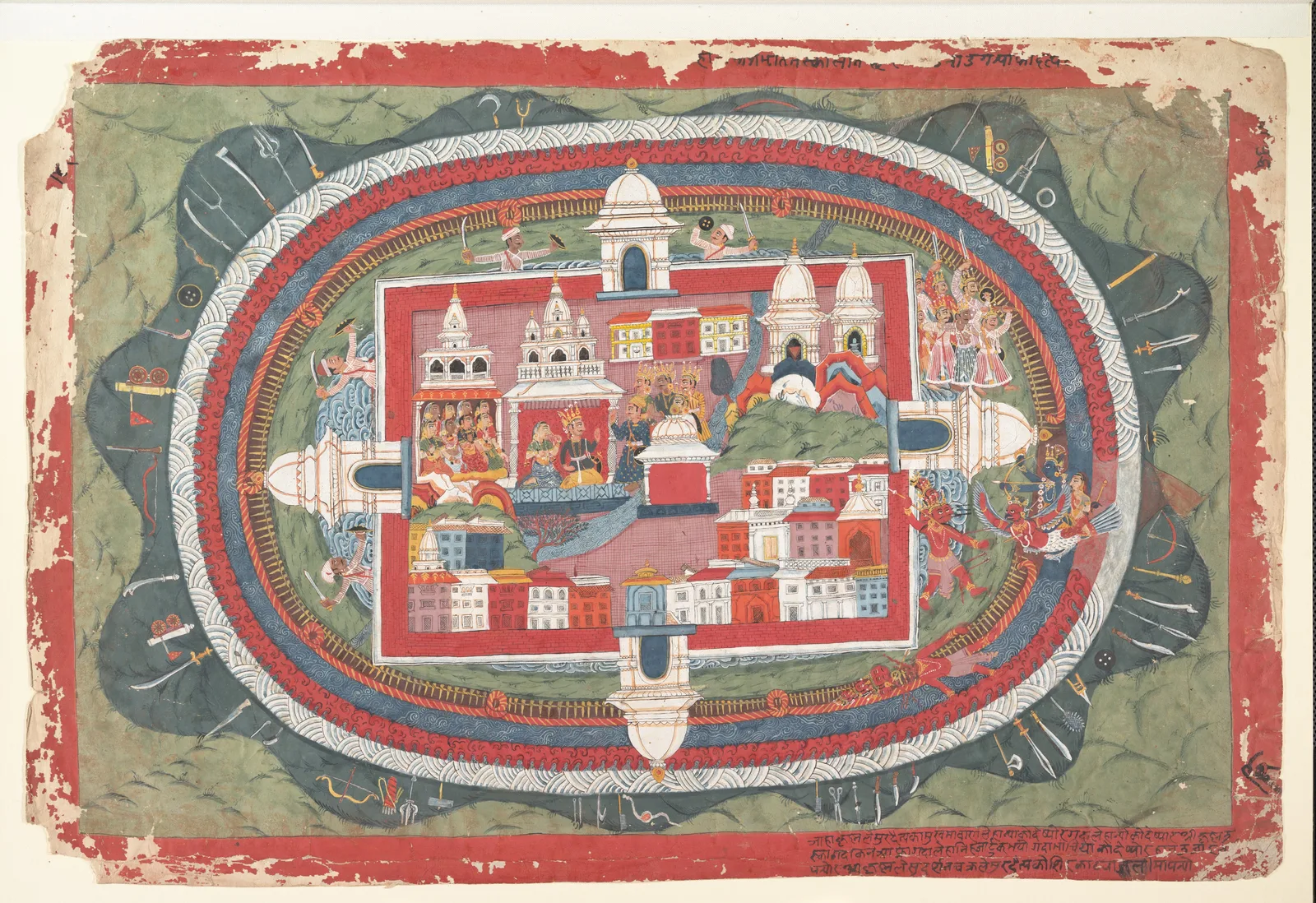 A page from a dispersed Bhagavata Purana manuscript, Kathmandu Valley, about 1775. Its unusually large painted folios show how the text travelled beyond India and entered Nepalese court culture. The Metropolitan Museum of Art, public domain.
A text that travelled through art, language, and performance
The Bhagavatam did not survive through Sanskrit manuscripts alone. Its stories moved into regional languages, miniature painting, woven temple hangings, dance, drama, bhajan, and oral explanation. That is one reason Bhagwat Katha feels different from silently reading a book: it belongs to a larger performance tradition in which voice, music, gesture, and image help carry meaning.
The surviving art is wonderfully varied. A sixteenth-century Delhi–Agra folio compresses Krishna’s welcome into crowded bands of music and movement. A Garhwal painter gives the Kaliya episode a sweeping landscape and a dark, poisoned Yamuna. Nepalese painters created unusually large narrative pages. In Assam, Krishna’s stories were woven into silk alongside verses translated by the Vaishnava saint Shankaradeva.
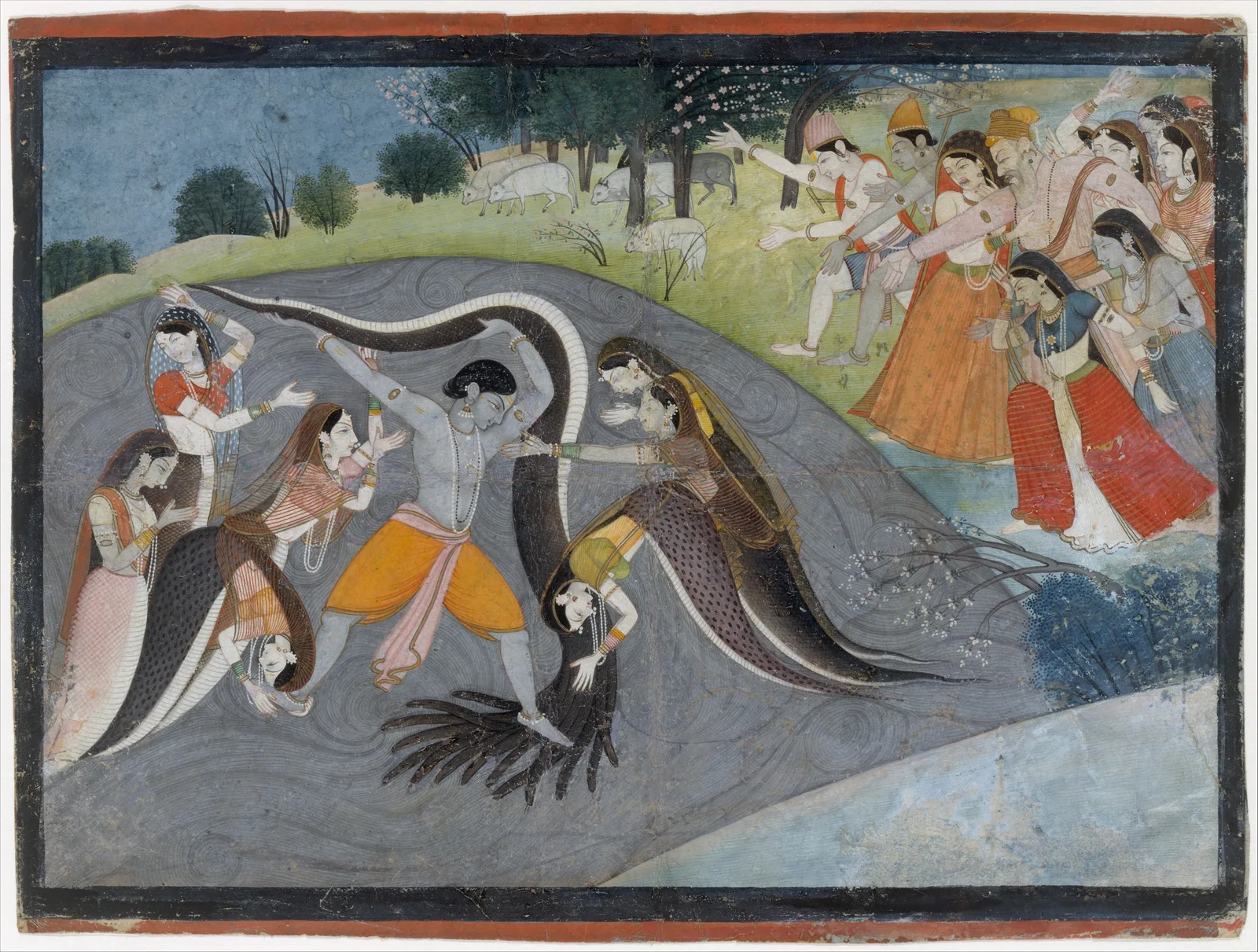 Krishna subduing Kaliya, Garhwal, northern India, about 1785. Krishna restores the poisoned Yamuna and then grants mercy when Kaliya submits. The Metropolitan Museum of Art, public domain.
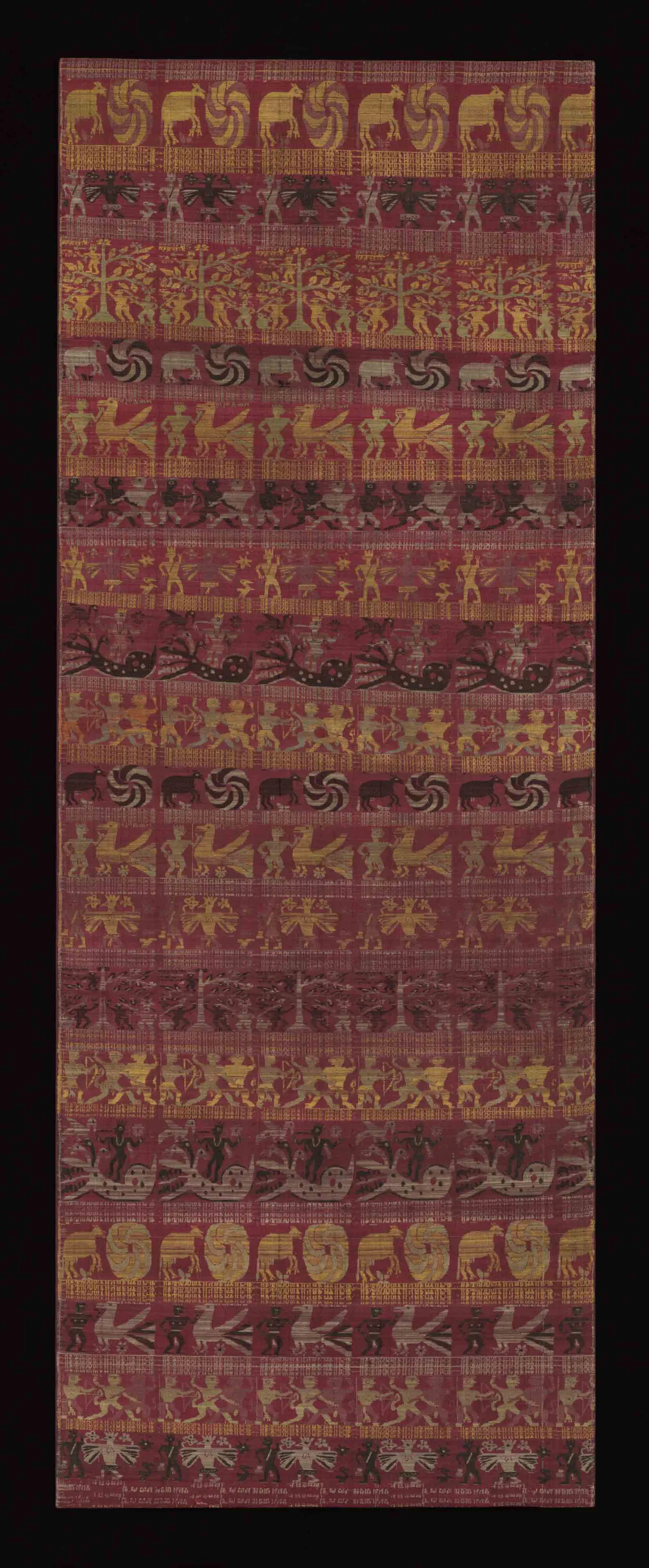 Detail of an early seventeenth-century Assamese silk temple hanging. Its narrative registers combine scenes of young Krishna with sacred words in Assamese, showing text, image, and devotion woven together. The Metropolitan Museum of Art, public domain.
Why is the Katha held over seven days?
The seven-day form is connected to the story of King Parikshit. Knowing he had only seven days to live, the king left his throne, sat beside the Ganga, and asked the sage Shukadeva the question that mattered most: what should a person hear, remember, and do at the end of life?
Shukadeva answered by narrating the Bhagavatam. Parikshit listened with complete attention for seven days. The setting gives the Katha its familiar rhythm, but its message is not only about life’s final week. It asks each of us what deserves our attention now.
Seven days, one sacred journey
Every Katha Vyas brings a distinct voice and emphasis, so the exact daily sequence may vary. The journey commonly moves through these great currents of the Bhagavatam:
- The question of a meaningful life — King Parikshit meets Shukadeva, and listening itself becomes a spiritual practice.
- Creation and divine presence — the Katha opens the vast vision of creation and the ways Bhagwan remains present within it.
- The faith of the devotees — stories such as Dhruva and Prahlada show devotion held steady through hurt, fear, and opposition.
- The avatars of Bhagwan — teachings unfold through Kapila, Narasimha, Vamana, and other divine manifestations.
- Krishna Janma — the birth of Shri Krishna is welcomed with singing, joy, and celebration.
- The leelas of Vrindavan — Bal Krishna, Govardhan, the gopis, and the love of Radha reveal bhakti as intimacy with the Divine.
- Love, friendship, and return — the stories move toward surrender, Krishna’s friendship with Sudama, and Parikshit’s final liberation.
The point is not to collect seven days of information. The stories build upon one another until the listener begins to see the same teaching everywhere: pride separates, love draws near, and remembrance changes the heart.
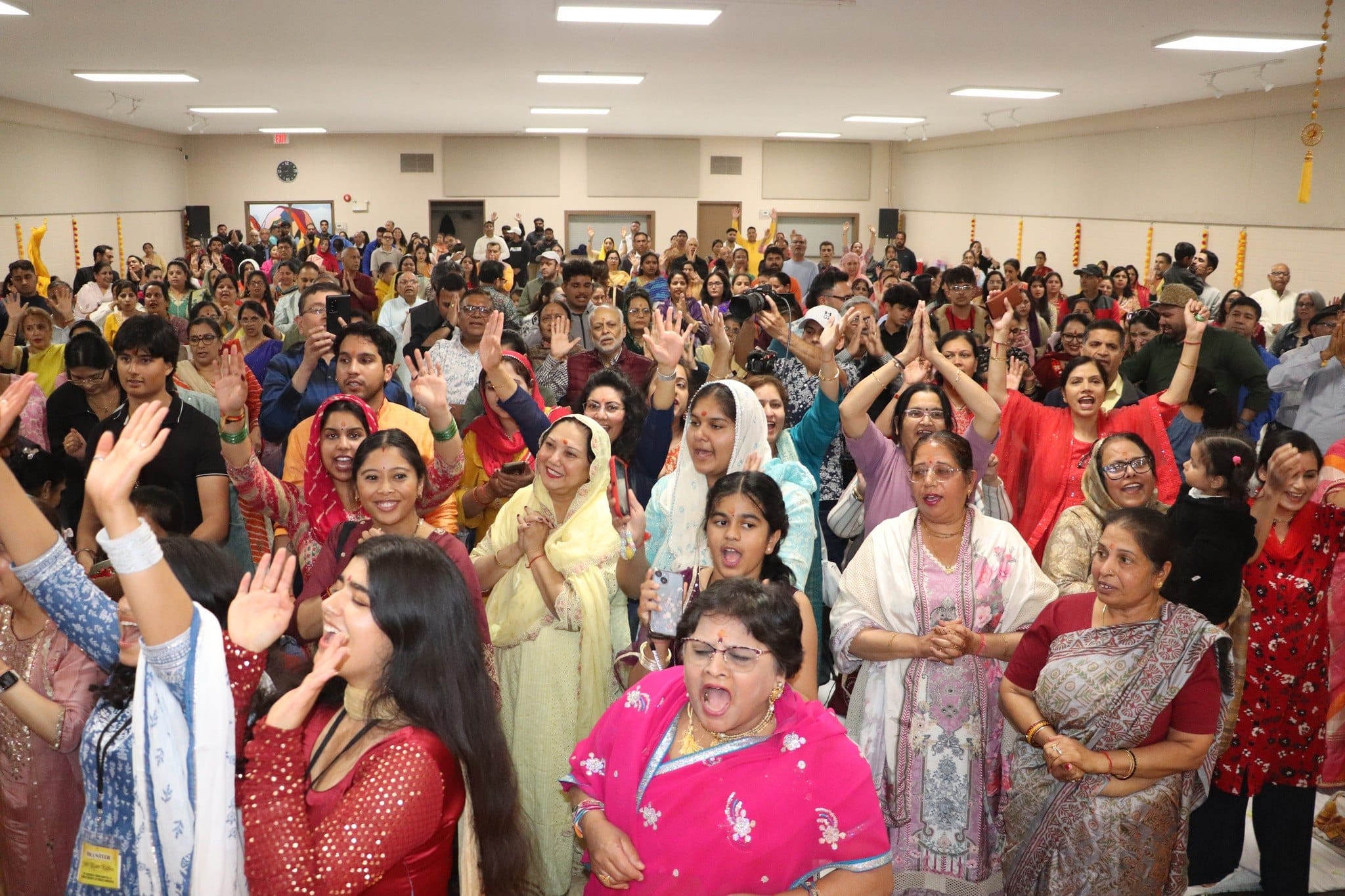 The tradition continues in community: through sacred story, bhajan, prayer, and shared reflection.
What happens when you attend?
You do not need to know Sanskrit, own a copy of the Bhagavatam, or have attended a Katha before. Come ready to listen.
An evening usually opens with aarti and invocation. The Katha Vyas then weaves together verses, stories, everyday examples, and bhajans. Some moments are contemplative; others are full of music and celebration. Krishna Janma, Govardhan leela, or Sudama’s meeting with Krishna may be marked with flowers, singing, or a simple dramatic presentation.
At HSNA’s Katha, each evening closes with aarti, prasad, and bhandara. The meal is not an afterthought. Sitting and eating together is part of the gathering: no ticketed seats, no insiders and outsiders, just a community receiving the same prasad.
How to listen to Katha
The Sanskrit tradition calls this shravanam — devotional listening. It is active, even when you are sitting still.
- Arrive a little early and let the transition into the space be unhurried.
- Listen for one teaching that meets your life as it is today.
- Join a bhajan or response when you feel comfortable; quiet listening is equally welcome.
- Bring children. They may move, ask questions, or understand only one story. That one story can stay with them.
- Return for more than one evening if you can. Each day has its own meaning, but the full arc deepens across the week.
Why gather for these stories now?
Many Calgary families live far from the places where their parents and grandparents first heard these kathas. A seven-day gathering lets the tradition travel without becoming a museum piece. Elders hear familiar names and melodies. Children see that sacred stories belong not only in books, but in a room full of people they know. Friends who are simply curious can enter without needing to prove what they already understand.
The Bhagavatam’s world is ancient, but its human questions are immediate: What do we do with fear? What makes devotion steady? How should power be used? What kind of wealth survives us? How can love remain present in separation?
Katha does not rush to reduce those questions to slogans. It gives them time, story, music, and company.
Join the Shrimad Bhagwat Katha in Calgary
HSNA welcomes everyone to seven evenings with Pujya Acharya Vinod Sodiyal Ji, from July 12–18, 2026, 6:00–9:00 PM, at the Genesis Centre in NE Calgary. Entry is free, and prasad and bhandara follow each evening.
See the complete Katha schedule, venue details, and ways to participate →
Come for one evening or walk with the story through all seven. Families, children, elders, and first-time visitors are all welcome.
Sources and image credits
- National Museum of Asian Art: Bhagavata Purana — concise museum reference for the text and its historical dating.
- McComas Taylor, Seven Days of Nectar: Contemporary Oral Performance of the Bhagavatapurana — scholarly history and ethnography of the seven-day performance tradition.
- Padma Purana, Uttara Khanda, chapter 198 — translated instructions for listening to the Bhagavata during a week.
- The Metropolitan Museum of Art: Krishna welcomed into Mathura, Krishna subduing Kaliya, Nepalese Bhagavata folio, and Assamese temple hanging. All four works and their digital images are identified by the museum as public domain.