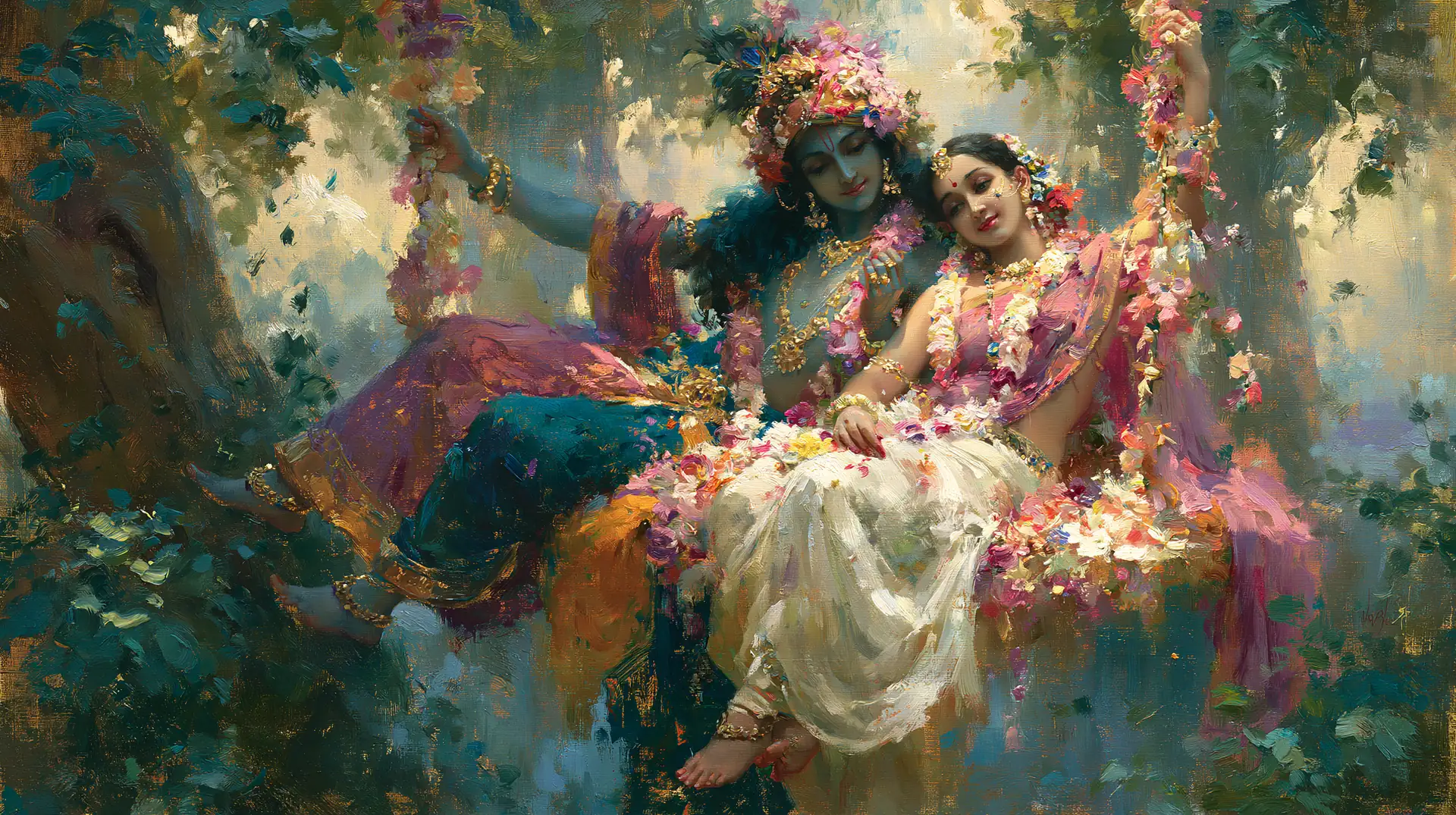
The Goddess who dwells in all beings
Yā Devī Sarvabhūteṣu
Devi Mahatmyam, Chapter 5
या देवी सर्वभूतेषु शक्तिरूपेण संस्थिता । नमस्तस्यै नमस्तस्यै नमस्तस्यै नमो नमः ॥
yā devī sarva-bhūteṣu śakti-rūpeṇa saṃsthitā namas tasyai namas tasyai namas tasyai namo namaḥ
Word by word
- yā devī
- she, the Goddess, who
- sarva-bhūteṣu
- in all beings
- śakti-rūpeṇa
- in the form of power
- saṃsthitā
- abides, is established
- namas tasyai
- salutation to her
- namo namaḥ
- bowing again and again
Where it comes from
The verse comes from the fifth chapter of the Devi Mahatmyam, also called the Durga Saptashati or Chandi Path, the central scripture of Goddess worship. In the text it is not one verse but a litany: the same salutation returns again and again with a different word in shakti's place — the Goddess as consciousness, as intelligence, as sleep, as hunger, as patience, as peace, as memory, as compassion, as mother. It is recited through the nine nights of Navratri.
What it means
The claim is larger than it first sounds. The Goddess is not said to visit all beings, or to watch over them. She is samsthita — established in them — as every capacity they have. Whatever moves in a creature, that moving is Her. The litany then makes you bow to Her in forms you would never think to worship: in hunger, in sleep, in error. Nothing alive is outside Her, which means nothing alive may be held in contempt.
Reflections
The triple namas tasyai is not decoration. Repetition is how the body learns what the mind has only heard. By the third salutation something in the reciter has actually bowed, and across nine nights of Navratri the litany does this dozens of times, name after name, until the habit of reverence reaches everything it touches.
The everyday teaching is close at hand. If the Goddess abides in all beings as power, then the person in front of you — however ordinary the moment — is a dwelling of Hers. The verse does not ask you to feel this. It asks you to bow, and let the feeling follow the bowing.
During Navratri at HSNA you will hear this verse rise and fall like a tide. Ask an elder why it repeats so much and you may get the best answer: because we forget so much. The verse repeats exactly as often as we need it to.