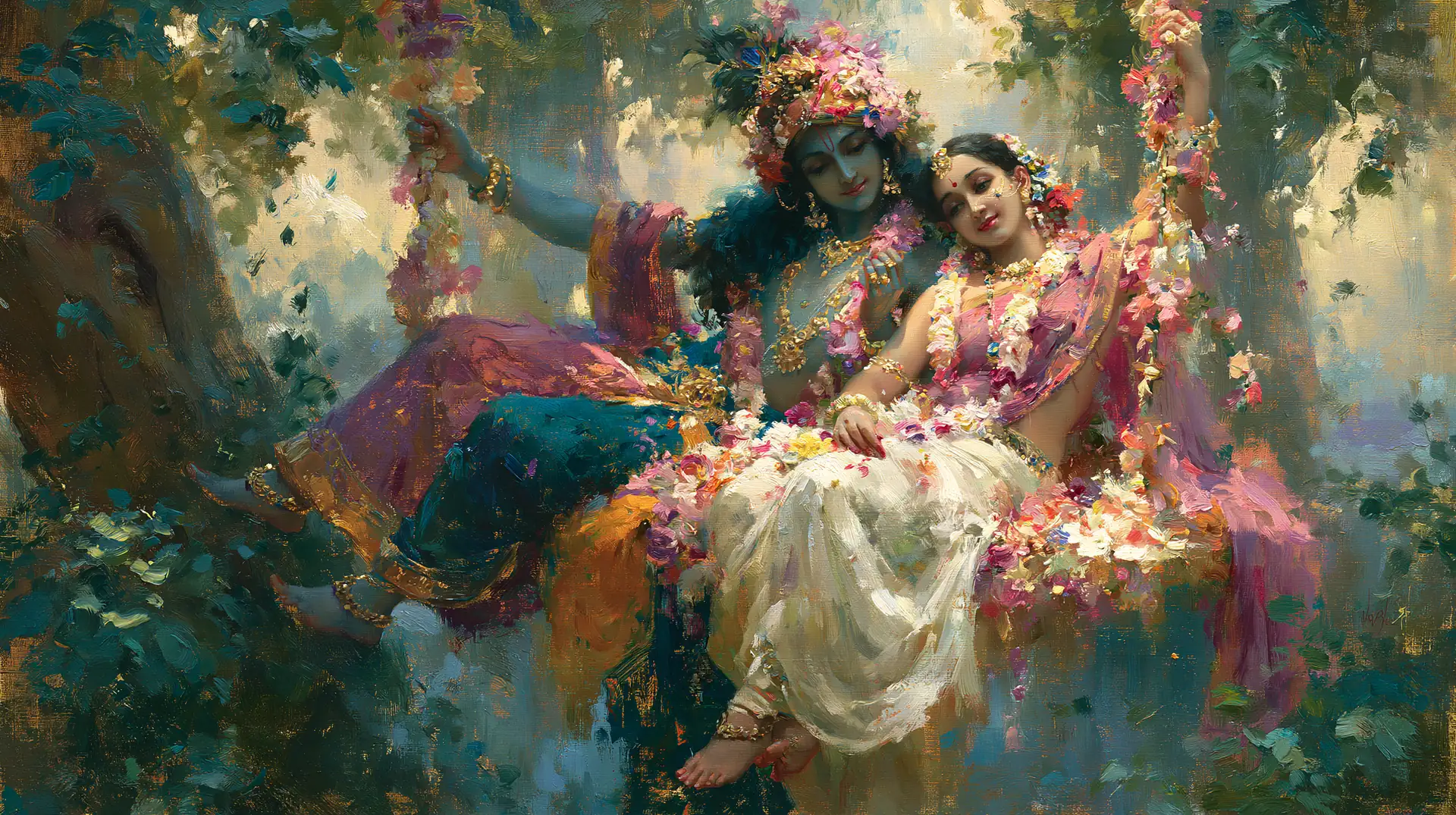
You are my everything
Tvameva Mātā Cha Pitā Tvameva
Traditional prayer
त्वमेव माता च पिता त्वमेव त्वमेव बन्धुश्च सखा त्वमेव । त्वमेव विद्या द्रविणं त्वमेव त्वमेव सर्वं मम देव देव ॥
tvam eva mātā ca pitā tvam eva tvam eva bandhuś ca sakhā tvam eva tvam eva vidyā draviṇaṃ tvam eva tvam eva sarvaṃ mama deva deva
You alone are my mother, and you alone my father. You alone are my kin, and you alone my friend. You alone are my knowledge, and you alone my wealth. You alone are my everything, O God of gods.
Where it comes from
This much-loved verse is recited at the close of pujas across North India, often just before the final aarti. It is a prayer of surrender, naming the Divine as every relationship a person leans on, and it is simple enough that children learn it early and carry it for life.
What it means
The prayer works by listing. Mother, father, kinsman, friend, knowledge, wealth: the relationships and goods a life is built on. One by one it hands each of them back, saying tvam eva, you alone are this. By the last line there is nothing held back. “You are my everything” is not an exaggeration once the list has been gone through honestly.
Reflections
There is a reason the verse starts with mother and father rather than with grand titles. It reaches for the closest bonds first, the ones a person feels before they can name anything else, and points past them to their source.
Said at the end of a puja, it does the quiet work of letting go. The aarti lamp is circling, the day's asking is done, and the heart settles on a single thought: whatever I have leaned on, it has all been You. People often grow still right here, and that stillness is the prayer landing.